All posts by Rob

Volunteers in the Wilderness

IMG_0847_1(Photo by Robert Barossi)

by Robert Barossi

Environmental volunteers do their work in every kind of natural setting. Some are on boats out on the open seas. Others are in canoes on tiny lakes and ponds. Some are in wide open fields and meadows. While still others are deep in the heart of dense wilderness, like the volunteers who participated in this effort to clear trails in the Selway-Bitterroot Wilderness. This enormous area of wilderness, 1.3 million acres of land, spans parts of Idaho and Montana, with roughly 1,800 miles of trails winding through it. Two different groups of volunteers were brought in for the trail work, one led by the American Hiking Society and the other by the Sierra Club, both hosted by the Selway-Bitterroot Frank Church Foundation. The article quotes the Foundation’s program director, Coby Gierke, who says, in part, “The issues that we face here are not that much different from other wilderness areas. After experiencing it for themselves, they [the volunteers] become great stewards and help tell this story nationally.” Hopefully, they will do just that and continue to do this kind of work in whatever wilderness surrounds them, no matter where they live.

If you enjoyed any of the stories on this blog, download my eBook – Being Where You Are: How Environmental Volunteers Impact Their Community and the Planet Every Day. Available at the following links:

iTunes

Amazon

Kobo Books

Barnes and Noble

BeingFinal

Volunteers in the Water

IMG_1584(Photo by Robert Barossi)

by Robert Barossi

Bodies of water all over the world are in need of regular monitoring to ensure the health of the natural ecosystem as well as the humans who live in the local watershed. In countless places, it’s environmental volunteers who do the monitoring. This story, out of Delaware, features a volunteer team who are a prime example of the kind of work these citizen scientists are doing. They offer a great example of not just the kind of work, but how it benefits both them and the organizations they volunteer for. Check out this link for more info on the University of Delaware’s Citizen Monitoring Program and all of the work being done by their dedicated volunteers.

If you have enjoyed the stories on this blog, download my eBook – Being Where You Are: How Environmental Volunteers Impact Their Community and the Planet Every Day. Available at the following links:

iTunes

Amazon

Kobo Books

Barnes and Noble

BeingFinal

Volunteers and Drones

367(Photo by Robert Barossi)

by Robert Barossi

This volunteer story jumped out at me immediately this morning. The topic of drones and their use, whether military, commercial or personal, is a hotly debated one these days. Drones have become one of the primary means through which the U.S. military does its job. And corporations like  Amazon are trying to use them to revolutionize the way they do business. There are countless other ways drones can be used, including humanitarian efforts. In Great Britain, both drones and volunteers are being used to survey and study the impacts of sea level change and coastal erosion. Working together, drones and volunteers will gather information and data that will indicate how the changing sea is impacting the coast and important historical sites along the shore.  There are many other potential uses for this kind of drone/volunteer work related to the environment, such as surveying populations of endangered species or finding areas of pollution in bodies of water. While using drones is highly controversial, it can have both positive and negative impacts and is an issue that likely won’t be settled any time soon.

If you have enjoyed any of the stories on this blog, download my eBook – Being Where You Are: How Environmental Volunteers Impact Their Community and the Planet Every Day. Available at the following links:
iTunes

Amazon

Kobo Books

Barnes and Noble

BeingFinal

Volunteer Shell Game

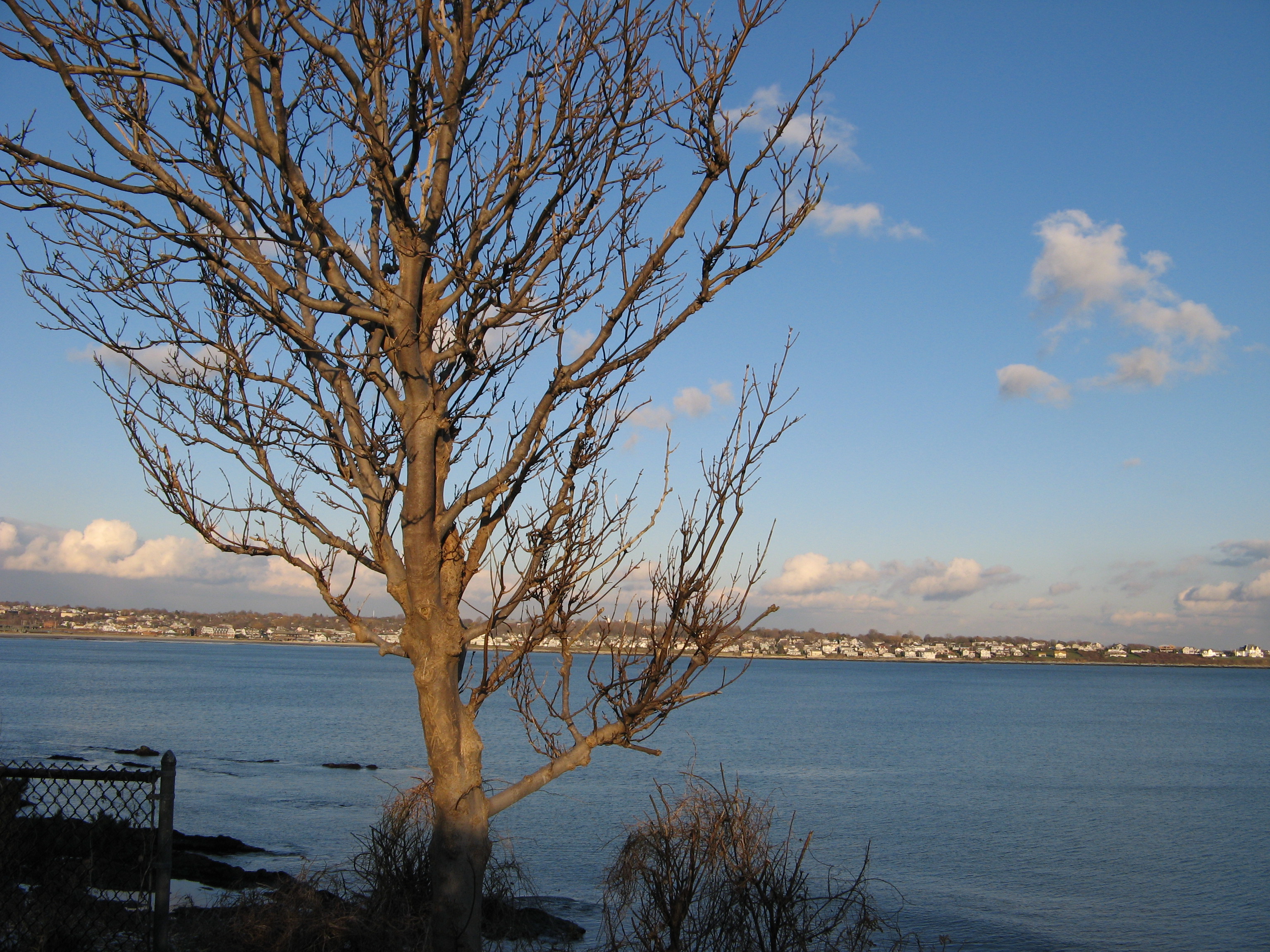
Cliff Walk Tree(photo by Robert Barossi)

by Robert Barossi

There are a number of great things happening in this story out of Newport, Rhode Island (which happens to also be one of my favorite places). In that city by the sea, there’s an ongoing effort led by the Nature Conservancy to restore oyster beds in coastal ponds and estuaries. All by itself, that’s a fantastic thing, as it will go a long way towards improving and restoring those fragile and important ecosystems. Also great is that the effort involves a number of local businesses, restaurants who are donating oyster shells to the Conservancy. This group of restaurants is donating thousands of pounds of used oyster shells which the Conservancy, along with its volunteers, will return to the shoreline. It’s another exciting example of environmental organizations, volunteers and area businesses working together to preserve and protect the local natural habitat.

If you’ve enjoyed any of the stories on this blog, download my eBook – Being Where You Are: How Environmental Volunteers Impact Their Community and the Planet Every Day. Available at the following links:

iTunes

Amazon

Kobo Books

Barnes and Noble

BeingFinal

Volunteers Track Down the Trash

P1000689(Photo by Robert Barossi)

by Robert Barossi

Well, this may have been the longest hiatus I’ve taken from the blog since it started a few years ago. With crazy the summer finally winding down, I’ll be back here more frequently, posting more stories of environmental volunteers. Today’s story didn’t take much searching to find and it deals with one of the biggest threats facing our oceans. Known as the Great Pacific Garbage Patch, this enormous area of litter and trash, some say larger than Texas, has become a major focus for many scientists and environmentalists. This article from National Geographic does a great job of detailing exactly what the Patch is, where it is and why it’s there. Recently, a group of volunteers took part in an expedition to map the Garbage Patch and find out just what kinds of trash, plastics and debris are in there. According to this article from the Associated Press, these citizen scientists, on 30 boats, measured the size and mapped the location of “tons of plastic waste.” This volunteer effort will go into a report by The Ocean Cleanup, an organization that hopes to develop technology in the next few years that will reduce or eliminate this enormous mass of trash that’s polluting our oceans.

If you’ve enjoyed any of the stories on this blog, download my eBook – Being Where You Are: How Environmental Volunteers Impact Their Community and the Planet Every Day. Download it at the following links:

iTunes

Amazon

Kobo Books

Barnes and Noble

BeingFinal

Volunteers and Snapping Turtles

1024px-Common_Snapping_Turtle_Close_Up(Photo by Dakota L., Courtesy of Wikimedia Commons)

by Robert Barossi

As many stories on this blog have demonstrated, environmental volunteers are often citizen scientists. They collect the data that professional scientists will use for a variety of experiments, tests and research. In Connecticut, volunteers are collecting samples from snapping turtles, samples which are part of a number of research projects. The information obtained from this research will do more than reveal the health of the turtles. It will also reveal the health of the ecosystem as a whole and the health of the humans who sometimes eat the turtles. Volunteers will be an important part of collecting the samples  that researchers at Mystic Aquarium will turn into invaluable data.

If you’ve enjoyed any of the stories on this blog, download my eBook – Being Where You Are: How Environmental Volunteers Impact Their Community and the Planet Every Day. Available at the following links:

iTunes

Amazon

Kobo Books

Barnes and Noble

BeingFinal


Volunteers Keep the Invasives Out

IMG_0214(Photo by Robert Barossi)

by Robert Barossi

People have already started to say that “summer is almost over,” but I’m not ready to go there just yet. It’s still the middle of summer in my mind, the perfect time to be having summer adventures and vacations. One of the most popular activities during the summer is taking the boat out to the local lakes and rivers. When people take their boats far from home, to more distant bodies of water, this can become a serious problem. Invasive species can hitch a ride on those boats and travel with them to other lakes and rivers, finding new  homes there. When they do, they can disrupt and even take over ecosystems, with potentially disastrous results. To prevent this from happening, many boat launches host volunteers who work to remove invasive species before the boats hit the water. This story out of Michigan is just one example of how volunteers are working to keep invasive species off the boats and out of the water. There are numerous programs like this, from the Clean Boats, Clean Waters program in Wisconsin to the GREAT Boaters Program in Rhode Island. All of these efforts, with volunteers at the forefront, go a long way towards reducing the potential for serious ecological problems caused by invasive species.

If you’ve enjoyed the stories on this blog, download my eBook – Being Where You Are: How Environmental Volunteers Impact Their Community and the Planet Every Day. Available at the following retailers:

iTunes

Amazon

Kobo Books

Barnes and Noble

BeingFinal


Volunteers Working with Rangers

Through the Trees

by Robert Barossi

I found out this morning that today is World Ranger Day. Along with environmental volunteers, Park Rangers are on the front lines of conservation efforts around the world. Rangers do a wide variety of jobs, including many tasks which are directly related to environmental protection and preservation. They are often, if not always, the ones who train and lead the volunteers who work alongside them.

There are numerous examples of volunteers and rangers working together. Here are just a few of them that popped up this morning: In Wyoming, both volunteers and rangers work to keep people using the parks safe. In Tennessee, volunteers are working alongside rangers to remove invasive species. The same kind of work is happening in Great Britain. A volunteer in this story from North Carolina notes that the volunteers support and assist the rangers by doing “necessary work that the park rangers don’t have time to accomplish.” And on the Delaware River, rangers and volunteers worked side-by-side to clean up the river during a large annual cleanup event.

If you’ve enjoyed the stories on this blog, download my eBook – Being Where You Are: How Environmental Volunteers Impact Their Community and the Planet Every Day. Available at the following links –

iTunes

Amazon

Kobo Books

Barnes and Noble

BeingFinal

Summertime Volunteer Trail Work

48_16(Photo by Robert Barossi)

by Robert Barossi

Summer is prime time for environmental organizations and agencies to work on maintaining wilderness trails. Warmer and drier weather gives them a chance to improve existing trails for walking, hiking and biking, and to build new ones. It’s often volunteers who do most, if not all, of this work. Today, a few stories of volunteer trail work:

Truckee Trails Foundation is hosting work days where volunteers are getting out and working on a number of local trails in the Lake Tahoe area.

In Boise, the Idaho Trails Association is leading crews of volunteers into the forest to clear trails of fallen trees and other debris.

And in western Pennsylvania, a number of different organization are involved in the maintenance of hundreds of miles of trails, with the help of many dedicated volunteers who put in thousands of hours of work.  “If it wasn’t for volunteers, there wouldn’t be a trail system,” says Chris Ziegler, president of the Butler-Freeport Community Trail Council, who is quoted in the article. “Every time a tree is down, it’s a volunteer that goes out and takes care of it.”

That is no doubt true of all of these trail systems and thousands more like them all over the world.

If you’ve enjoyed the stories on this blog, download my eBook – Being Where You Are: How Environmental Volunteers Impact Their Community and the Planet Every Day. Available at the following links:
iTunes

Amazon

Kobo Books

Barnes and Noble

BeingFinal

Volunteers Help People Pack it Out

P1000405(Photo by Robert Barossi)

by Robert Barossi

Finally back at the blog after a vacation in New  York City and then a few days of recovering from vacation in New York City. A great story this morning from far south of there, Brevard County, Florida. A group called Keep Brevard Beautiful is holding a number of events this summer, all aimed at living up to their name, keeping Brevard’s beaches protected and preserved. Their most recent event implored visitors to those beaches to “pick it up, pack it out.” This was a great event which saw volunteers handing out biodegradable bags to beach visitors. Doing this eliminates one reason why trash so often gets left behind on beaches (“I didn’t have anything to put the trash in”). Hopefully, it led to lots of people picking up and packing out their trash and also gave them the inspiration and motivation to keep doing so in the future.

If you’ve enjoyed the stories on this blog, download my eBook – Being Where You Are: How Environmental Volunteers Impact Their Community and the Planet Every Day

iTunes

Amazon

Kobo Books

Barnes and Noble

BeingFinal