Finding the Time to Volunteer

Foliage Reflected(Photo by Robert Barossi)

by Robert Barossi

Finally back at the blog today and I’m posting another chapter from my upcoming book. This one features a volunteer who offers some wisdom about how busy people can find the time to get involved in volunteer efforts.


Finding the Time: Bill Dwyer

Bill Dwyer has lived on the coast of Rhode Island for the “vast majority” of his life, having grown up in Bristol, then moving to Warren and Great Barrington. His career as an IT professional keeps him very much indoors during work time. He balances that with plenty of time spent outdoors, volunteering, along with his wife Deb, for Audubon of Rhode Island and Save the Bay. Sitting in his kitchen, Bill, with an endless amount of joyous energy, told me of the many ways he and Deb assist these organizations. Activities range from managing and leading beach cleanups, selling memberships, setting up audio equipment, all the way to dressing up as a red fox during Audubon’s yearly Halloween hike in the woods. The Dwyers are an example not only of the many different ways volunteers can get involved in environmental organizations, but also how busy, working people can find time and opportunities to make a difference. Finding those ways to make a difference is something Bill feels strongly everyone can and should be doing.


“In my generation, kids went outside,” Bill says with a laugh. “I remember going down the fields and playing baseball with the guys and there wasn’t a lot of…there wasn’t a huge amount of organized stuff other than the farm team and the little league. We played in the field that we cut the grass on if we needed to. I think there were forsythia bushes that if you hit it into the bushes it was a double. If you hit it over the bushes it was a home run except for one kid who was so much bigger than the rest of us, for him over the bushes was a double and you had to hit Mrs. Dixon’s roof for a home run. It was baseball and football and basketball. But we did winter stuff to, like we went tobogganing and we went sledding. But that was what you did. You didn’t sit home and watch the television then. You got snowed in, you made a snow fort, you went sledding. I grew up near the water, I grew up in Bristol, the water was three houses down the street from me. The common in Bristol had a basketball court…a bunch of us would bicycle to down near the college, there was a basketball court down there that they let us use. When you’re outside at say five…when you’re seven, eight, nine, it’s just a playground to you; you don’t appreciate where it came from. It’s just there.”

For the past twenty-five years, Bill has been helping Audubon of Rhode Island with the Ocean Conservancy’s International Coastal Cleanup, an annual event where local residents lead cleanup efforts at area beaches. “I wasn’t there the first year,” he says. “I think I found out about it the second year and I said, ‘I’ll run one of those.’ I think it was somehow or other I saw it in the paper. For the last few years, there’s been over a hundred beaches cause it’s not just beaches anymore, it’s the rivers and stuff like that. If I remember right, the first year, there were only eight beaches in the state of Rhode Island that got done. I was in the second group, so it wasn’t like there were a lot of beaches to sign up and go clean. They needed somebody to lead a beach so I said, ‘ok, I’ll do that.’”

“How does the International Coastal Cleanup work?” I ask.

“You can read more about it on the Ocean Conservancy website…it is literally what it says, an international coastal cleanup,” Bill says. “We’re cleaning in Rhode Island, somebody is cleaning in Florida, somebody is cleaning in France, and somebody is cleaning in the Philippines. All on the same day. If you go to the Ocean Conservancy website, you can actually see the statistics that have been collected all over the world…The International Coastal Cleanup, you document what you picked up, so you know that you picked up 1000 cigarette butts, 300 plastic tabs, this many pieces of fishing line, this many plastic bottles. That makes a huge difference. Years ago, I went to the town council in Barrington, got myself put on the agenda, and I requested that they ban smoking on all town properties and I had the statistic of what we picked up on the beach for the last several years. The town council and I compromised and we banned smoking on the town beach. But that’s how we got smoking banned on Barrington Beach and the same thing happened with the state beaches. It’s one thing to walk in and say, ‘we pick up a lot of cigarette butts.’ It’s another thing to say, ‘we picked up this many cigarette butts.’ It also targets where problems are. Years ago, the rings that six pack sodas came in, those were a major problem. You don’t see them hardly anymore and that is one of the reasons, because you can point out that it’s a problem, we’re picking up this many of these.”

While Bill says he’s managed a lot of different beaches over the years for the annual event, he now focuses on Barrington Beach. “It has become our target. That’s what we do and we do it three times a year. In May, November, with Save the Bay, and it’s almost always the third Saturday in September for the International Coastal Cleanup with Audubon,” he says. “For the Audubon one, for International Coastal Cleanup, I maintain my own list. They’ll put the website up and if somebody signs up on that, they just relay the information to me but I manage it. I take the signups, I keep track of it. Save the Bay, they administer it themselves. It goes to them, if you wanted to sign up with me, I’d have to tell you to go to the website or email them, they maintain the list and they do that part completely. All I have to do is the get my box of supplies and I just have to show up and manage it.”

“When you are managing other volunteers, what’s the process? What’s it like to be a volunteer managing other volunteers?”

“For International Coastal Cleanup, we put up posters that say we’re looking for volunteers. We’ll go to supermarkets and put up signs that say we’re looking for volunteers. I will call the local paper and ask them if they can do something for us and they are always willing to do that. Audubon puts out the thing and what it says is, ‘if you want to sign up, contact Bill and Deb Dwyer,’ and there’s a phone number and an email address. So I have to maintain a list of who I have coming, I have to send them directions on where to go, what to bring. For the International Coastal Cleanup, I also have to manage estimating and getting t-shirts for them, so I try to get everybody to get me a size ahead of time. When we actually go to the beach, my car will be there with sign on it and then we get everybody around and I give them a talk on how to stay safe, what they should be doing. I say, ‘don’t pick up stuff that’s too heavy. If you get something that has fluid in it and it’s sealed, don’t open it up because you could have something very caustic in there. Leave natural stuff alone, if it’s a dead crab or a tree branch, you know, that’s natural, leave it there. If it’s a hunk of pressure treated wood, you can bring that back.’ And then we make sure that we have release forms from everybody. This is the first year that Audubon had to do release forms, it’s the nature of…it’s never been a problem until something happened and so now we do releases. Save the Bay’s been doing it for as long as I can remember. I also, for the international cleanup, have to explain how to tabulate, if we have single people, put them in groups, say there’s three, one to hold the bag, one to pick up trash, one to write down. A lot of times it ends up being twos, one person holds the bag and picks up and the other person writes down. So at the end, you have to take care of getting all the sheets back and making sure that the tabulation sheets…that they put their information on it and stuff like how far they went down the beach and things like that. In general, somebody needs….just kind of administer the whole thing. Nobody has ever said, ‘why should we listen to you?’ Most people are happy they don’t have to do that, all they have to do is show up and pick up stuff.”

Bill and his wife have been managing coastal cleanups every year for some time, but they don’t restrict their involvement to cleanups alone. They are heavily involved in a number of activities throughout the year. Bill says, “I’ve gone to events and presented on behalf of Audubon. We’ve manned booths for them at events where people come by and we talk to them about Audubon or Save the Bay. We’ve done the same for both. The bottom line is you can’t save the whole planet at once so I’m trying to save it a piece at a time. And these are the two organizations in Rhode Island that are the best at saving the planet a piece at a time. Save the Bay is more bay-orientated and Audubon is more nature-orientated but they are both working on saving the planet one piece at a time. For Audubon, I do every event that’s at the environmental education center, and then I do the Halloween hike in Seekonk. For Save the Bay, I do whatever comes up that they need done that we can fit in. We did the eel grass transplant program and we’ve represented them at a number of events. I’m also a photographer for both of them. If you happen to see the raptor weekend poster, all but one of those pictures were from me. Save the Bay, that’s one of the things I do for them. If they need pictures…they had the beach slam in Barrington, for the second year. Both of the years, I’ve been the photographer for half a day of the event.”

Bill adds that his natural talents are put to good use, whether it’s working as a greeter, salesman or audio technician. “At many events, I’m what they label as the greeter, but it depends. It’s morphed because it appears that I have a knack for selling stuff. So as a greeter I was around the front, I’d direct people where to go, answer questions, but I was around the front, where the admissions table was. So the first year that they did the promotion of half price admission, I started talking to people out front and then I never left there. We shattered the record for the most memberships to Audubon sold in a day. It was cool. So now I tend to do some of the sales out front a lot. It depends on what else comes up. They had somebody else who used to do the audio but I can figure out that sort of stuff and there was nobody else around to do that. So this year I ran around setting up the audio.”

Save the Bay and Audubon both put a lot of emphasis on educating the public, something that Bill says he “really likes” about both organizations. As an example, he describes the yearly Halloween hike put on by Audubon. “They do Mother Nature’s Halloween Hike and the kids come dressed up. You can go on any number of Halloween hikes or Halloween events in any number of places and you get to see scary things usually and you get a goodie bag at the end and that’s it. This is a different world. Everything Audubon and Save the Bay do is educational and it’s usually educational towards the environment. So the Mother Nature Hike, we put the people in groups and we lead them out through the trails. There are little lights that light the way and maybe ten stops along the way. Each one of them has somebody dressed up as a character, most of the time it’s an animal but occasionally it’s something else. You stop at each spot and that creature tells you about what they do out in nature. I not only lead the groups or organize groups…first, I run around and take pictures…then, I either organize the groups or lead the groups or troubleshoot stuff. One year I was red fox and another year I was…I found out that was not really the thing for me to do. Because a lot of the people who do it have naturalist backgrounds. So for me to learn about the red fox…there’s a spiel they gave me about the red fox but seeing that I had no background…I had to memorize the thing, you know? Because I didn’t have the background to know that. Some of the people are phenomenal at doing that stuff and we found out that I was better off doing other things. Last year, somebody was a tree with all vines growing all over it and that was an awareness of the invasive species, cause the vine were the invasive species that had been coming in. So it really, really does teach…it’s always, always teaching them something…This is how a whole new generation is getting awareness of what’s going on. Save the Bay does the seal tours, it helps raise money for them but it takes people out and shows them the seals. You don’t just go out and there’s a seal, take a picture. They have a naturalist on board who explains all the information, different types of seals and stuff like that. Everything you do at either Audubon or Save the Bay, you learn something about the environment.”

“How much does it mean to be able to see the results of all your work?”

“That definitely helps but there will be things you do that you don’t see the results of,” Bill replies. “Not direct results, not like, ‘I see the beach has 340 pounds less trash on it.’ That is good, it makes you feel great. But, there are other…working raptor weekend, you don’t see the environment got improved form that but you see that people light up when they see the birds. The kids are so thrilled by the creatures they’ve seen and you know that’s going to stick with them and they’re going to remember that they want those creatures to be around. When you watch in the exhibit hall where the exhibit hall guide will pick up a crab and let the kid touch it, the kid’s just thrilled and now he knows what a crab is, he’s touched it, he knows these creatures are in the water now. He sees the fish in the tanks. Now when he looks at the bay, he’s not just going to see water, they’re going to know that there are these creatures that live in there. Did that environment improve right there on the spot, like taking 300 pounds of trash off the beach? No, but all these people who come through and learn that and learn what’s out there are going to be much more environmentally conscious in the future.”

“You guys keep so busy, with work and all the volunteering, it’s very time consuming,” I note. “How do you make it work?”

“You actually end up with a couple of hectic months,” Bill admits. “The fall tends to be busy. You’ve got the beach slam, you’ve got raptor weekend, you’ve got International Coastal Cleanup, you’ve got the Halloween hike and they all come in a pretty fair space of time. Then you have shows and stuff pop up in between. Some of the retired people are guides in the hall, they’re there one day or two days every week. No, for us, it’s not that bad, we tend to be more of the events and stuff like that. We don’t go and do something every week, we simply do not have the time. It’s nice cause Audubon knows, I tell them to just send me the dates for everything at the environmental center and the Halloween hike for next year and I’ll put it on my calendar.”

Bill adds that one of the most important things for people to remember is that there are many small opportunities and volunteering doesn’t have to be at a large-scale event. He says, “You can go to Audubon and be trained as an exhibit hall guide or a trail guide and you can say, ‘I’m going to do this one four hour shift a month.’ If you get fifty people that will do one four hour shift a month, you’re good. Nobody should be eliminated and nobody should think they can’t do this because they can’t put in twenty hours a week. None of these organizations expect you to put in twenty hours a week. If you can give them four hours a month, this is great. And they’ll train you to do the stuff, too. There’s classes on how to be a guide and stuff like that. Or you can pick what your strength is and what you’re comfortable with. If you like to be an exhibit hall guide and you think that’s what you’d like to do, sign up for that. If you’d like to do a craft table, you want to work with kids and help them draw and make the owl pin or put beads together, sign up for that. If you want to help out in the store, one Saturday for half a day a month, sign up for that. If you want to go to Save the Bay and stuff envelopes, Save the Bay gets people to do envelope stuffing for some of their mailings. If you want to be out of the public eye and sit there at a table and put fliers into envelopes, you can do that. Every little bit helps. If they lost all the people who give them four hours a month, it would be a problem. This is not your full time…if you’re retired and you can put in ten hours or sixteen hours a week, that’s awesome. But if you’re working full time and have chores at home and stuff like that, you can give a few hours a month. That is essential.”

“You can make a difference in a lot of things without having to devote your entire life to it. A lot of people don’t think of it that way,” Bill adds. “I think the biggest thing is you need to be willing to help and willing to give some time. The organizations that need help, anything from the environmental ones to the church…we help out the church, too…I can’t do every event at the church but I did four hours this Sunday and next weekend they’re having the bazar, I’m not having anything to do with that. Somebody else can take care of that. So you know, people need to realize that nobody is going to demand you show up ten hours a week. If you show up four hours a month, they’re just going to say, ‘thank you very much, we really appreciate it, you made a difference.’ And people need to realize that they can make a difference with a few hours a month.”

During all of his volunteer work, Bill has encountered an increasing number of people who are giving those hours and making a huge difference. When we spoke, he had just run another Barrington Beach cleanup, one which saw 118 people pick up 349 pounds of trash. “The good news is people are becoming more aware that the trash and stuff is a problem. Twenty years ago we never would have gotten 118 volunteers. The awareness has been raised a lot and especially in the younger generation.”
Places and People Change but the Story is the Same

Creek(Photo by Robert Barossi)

by Robert Barossi

In many places, environmental volunteers are performing unusual and unique tasks. There are without question many different roles they can play and a wide range of things for them to do. On the other hand, many volunteers are doing the same kinds of things over and over again, in many different locations. While it would be nice to have problems end so that their work isn’t needed anymore, that just doesn’t happen. And when I’m looking for environmental stories, it’s typically the same kinds of stories I see over and over again. For example, this wildlife rehabilitation story out of Texas, so similar to the work being done by rehab volunteers around he world. Or it might be another great story of volunteers doing anything they can to clean up a local river or waterway, this one in Maryland. While it’s inspiring and exciting to see some of the more unusual and fascinating things environmental volunteers do, it’s important to remember the equally inspiring dedication and passion they bring to the same kinds of jobs, repeated over and over, wherever the work is necessary.

Keepers of the Forest

IMG_1089(Photo by Robert Barossi)

by Robert Barossi

In so many instances, volunteers are the eyes and ears for environmental organizations. They are the “boots on the ground,” so to speak. While the organizations have some paid staff, they often can’t hire enough staffers to do the work that volunteers accomplish. In Asheville, North Carolina, there is a new volunteer-based group playing an important role in protecting the forests. The Forest Keepers is a program started by the Asheville-based Western North Carolina Alliance. In this interview, Alexandra Guest, an AmeriCorps Forest Keeper explains how the new group will protect the forest by balancing stewardship with environmental science. She says, “We’re hoping that people, in addition to recreating outside, will also be able to give back to the public lands that are around them by protecting them from invasive species, maintaining trails and being the frontline defense for different pests and pathogens.”

Taking a Dive for the Environment

P1000324(Photo by Robert Barossi)

by Robert Barossi

One of the volunteers I interviewed for my book was, among other things, a scuba diver in Newport, Rhode Island. He has spent years using his diving skills to help the environment in a number of ways, including a talent for underwater photography, which he donates to local environmental organizations. Other scuba divers, like this group of lawyers in the Cayman Islands, take to the ocean to help the environment by clearing rubble and debris. In this case, the problem was caused by the anchor of a Carnival cruise ship. The lawyers from Appleby’s spent a day helping to clear and repair the ecologically important coral reef that was damaged by the ship’s anchor. They are just a few of the people who have been volunteering to dive down and do whatever they can to save the reef.

Teaching Kids About Gardens and More

IMG_2597(Photo by Robert Barossi)

by Robert Barossi

One of the most important roles an environmental volunteer can take on is that of educator. At numerous sites, volunteers make up the staff of educators at nature centers, discovery centers, aquariums and other places where the public visit. Volunteers are the ones teaching children and adults about everything from birds of prey to local marine life to native plants. As this story from Texas tells us, volunteers are providing invaluable education about gardens, pollinators and horticulture to children in San Antonio, including those who live in urban areas. These kids, many of whom might not otherwise get close exposure to gardens and plants, are being given a chance to connect with nature in direct, hands-on ways. Programs like Youth Gardens and Kids, Kows and More,  as well as events like the BOOTanical Halloween event, are  staffed and supported by a number of volunteers. These dedicated people are providing an incredible opportunity for kids to learn about and connect with their natural world, even though they live in a major metropolitan area.

Up In the Air

Through the Trees(Photo by Robert Barossi)

by Robert Barossi

As noted in this article from Grist.org, citizen science in some form or another, has been around for a long time. The Audubon Christmas Bird Count is cited as just one example, and that’s been happening for a century. But, as this fascinating story describes, there is at least one kind of citizen science that may have a potentially huge impact: air quality testing. Water quality testing by volunteers has also been around for a quite a while. There are numerous stories of volunteers, all over the world, testing the quality of their local waterways. The volunteers in this story, though, are testing the quality of the air we all breathe. In some places, this is the first regular air quality monitoring that has ever happened. In other places, testing the quality of the air has become more and more important, as fracking and drilling sites have multiplied. There are some interesting points of view offered in the story regarding citizen science, it’s importance, potential and even controversy.

A Family of Beetle Ranchers

IMG_1609(Photo by Robert Barossi)

by Robert Barossi

Today, I’m posting another chapter from my upcoming eBook. Now that I’m putting the finishing touches on it, I hope to have it published and widely available soon. Until then, here’s another chapter, about a mother-daughter team of volunteers who raised beetles as part of a local effort to eliminate the invasive purple loosestrife.

The Family Way: Elizabeth and Samantha Emhardt

Amber waves of grain. Kentucky blue grass. California Redwoods. Unique and iconic plants can identify us, define us and inspire us. They can also deceive us. Driving through many parts of the country, a brightly colored plant can often be seen dominating the landscape, filling the open space with an unmistakably bright purple. Though it may be a beautiful shade of that color, the plant is unfriendly and unwanted. Purple loosestrife is an invasive species that has spread to most of the country and is frequently listed as an invasive or nuisance species. Exploring my home state of Massachusetts, I have encountered it numerous times, causing meadows, fields and wetlands to flame with purple light.

In the small town of Canton, a group of volunteers have joined the struggle to keep that flame from spreading even farther. Elizabeth Emhardt and her daughter Samantha are just two of those volunteers, introduced to the invasive plant by the Neponset River Watershed Association (NepRWA). The watershed association has teamed with a number of other organizations to wage war with the invasive plant, a war that employs a fascinating weapon: a beetle. To this end, volunteers like Elizabeth and Samantha perform an important role by becoming ranchers…beetle ranchers. For Elizabeth, a teacher and mother of two, this was an opportunity to volunteer and get involved, something she says she does as often as possible. For her daughter Samantha, a member of her high school science club and former member of Women in Natural Sciences, it was an exciting chance to engage her lifelong love of science.


“We always did fun thing in science, like experiments, and it was always really cool to find out how things worked,” Samantha says.

“Science rocks,” her mother agrees, with a smile. While she didn’t know the dangers of the plant prior to this project, Elizabeth says she did have some experience with purple loosestrife. “I remember driving by wetlands and seeing them solid purple.”

“It’s like an alien plant,” Samantha explains. “It’s not native, it has no natural predators here, so it will choke out all the native plants and wildlife and that’s bad.”

When they began the beetle ranching process, one of Elizabeth’s first questions was about the beetle and its natural predator. “If we are introducing all these beetles into the environment,” she had asked, “What happens with them, do we have to release something else to get these beetles?” The answer had been no, the beetles follow the plant and when the food source dies down, they die down with the food source.

“They only eat that one plant, that’s the only plant they eat,” Samantha adds, before going into an explanation of the beetle ranching process. “So, the first thing we do is we go out into the wetlands and actually dig up root balls of the purple loosestrife and we pot them and we put dirt and fertilizer in and we take eight. You can take eight or sixteen, so we take eight and then when you get home, you put them in a little kiddie swimming pool and fill it with water. You actually grow the purple loosestrife in a little homemade swamp. Then later they get beetles imported from Germany and they have beetle sorting day, which I haven’t been to. You’ll go and pick up ten beetles and they’ll be refrigerated so they are asleep and you put nets over the purple loosestrife so the beetles don’t escape, and you put two beetles, or a couple of beetles, with each plant, and then they have lots of babies, so you end up with way more beetles.”

“When did we release them?” Samantha asks.

“I thought it was kind of early that we released them this year,” her mother answers. “It was late July. You take the whole pot, plant, and there are stakes to help hold the nets up, and the nets also keep the predators out, from eating the beetles. So you take the whole mess, pot, net, stakes, back into the wetlands, take the nets off, pick off any larvae or little beetles and you put the plants back in the wetlands and the beetles just have at it.”

When the three of us spoke, Elizabeth and Samantha had completed the second and final time that they would participate in the beetle ranching program, which had been funded for five years. But both say they would gladly do it again, with Elizabeth commenting that during their most recent experience, the rest of the family got in on the fun.

“This past year, my husband and our thirteen year old son, I asked them if they would come with us and harvest the root balls. It’s really messy, you’re in those swampy wetlands, you’re digging these root balls and they are heavy, dirty clumps and you have to carry them out of the swamp and into a place where you can process them. So I asked my husband and my son to come and help us this year and they said yes, and it’s funny cause now my husband is like, ‘I see that purple loosestrife everywhere.’ So, he’s on board too.”

Samantha agrees that it was fun to share the experience as a family. “I think it’s really cool that we all go out there and harvest the root balls and everyone is doing it and then when we have the nets and the beetle set-up you can just go out and check on them, see how they are doing.”

Having a small swamp in their backyard, Elizabeth says, provided lots of opportunity for conversation and sharing the experience with family and friends. “We have a swimming pool in our backyard; we like to entertain a lot. We had this thing in our backyard, it’s a big kiddie pool with eight five gallon pots in it in your backyard with stakes and nets and sometimes it gets a little smelly cause in a sense you’re making a swamp in your backyard. It’s gotta be in a real sunny spot cause the purple loosestrife grows in the wetlands where there’s no trees or shade or anything. I mean, you can’t miss this thing in your backyard, so it gave us a lot of opportunities to talk about what we were doing, what this plant is and what the goal was, how we were ranching beetles.”

Since the project ended, Elizabeth says she has seen tangible evidence of success. “I have gone back and seen less purpose loosestrife. I noticed a spot in Canton that a couple of years ago I drove by and it was all purple and I thought it was beautiful and now I drive by and it’s not solid purple anymore. The beetles migrate where the food is and I’ve seen that because the purple loosestrife is not where it was five years ago and to my knowledge no beetles were released there.”

While beetle ranching may be over, there are other projects with the Neponset River Watershed Association and other opportunities to volunteer. Elizabeth mentions an upcoming river cleanup, “pulling tires and shopping carts and things like that out of the actual river.” She adds that she’d like her husband to go with her but she doesn’t sound sure that he will. “Well, you’re working full time, you have two kids, and the house always needs work done. You know, the lawn, he’s involved in boy scouts, he just moved from the finance committee to school committee. So, we do a lot of things besides work.”

Why then, I ask, did they decide to commit to the beetle ranching project? They both enthusiastically agree that it sounded very cool and interesting, with Samantha adding an excited “Beetles growing in our backyard!”

“It sounded really cool and the biggest time commitment was the day of harvesting, that’s a big commitment,” Elizabeth says. “A lot of people that do the volunteering are people with a lot of time on their hands. People who have a lot of time on their hands are retired people, they can’t physically do this stuff, they can’t go out into the swamps and dig out these root balls. You aren’t just digging out your own eight root balls; we dug out two hundred, over two hundred, root balls. It takes hours, you’re out there and it’s hot and it’s buggy but that’s the big chunk and the rest of it, it’s in your back yard, it’s a lot more manageable.”

In addition, they both felt that they were doing something good for the environment.

“It was kind of fun to help the natural wildlife come back and be restored,” Samantha says, adding, “I might do some more environmental volunteering, it was really cool.”

That environmental interest is something she clearly shares with her mother, who says, “I’m a big time gardener. I love to garden and be outside and spend time outside. I plant plants that I know will purposely draw hummingbirds to my yard. I have a bird bath. I have thistle seed for the goldfinch and house finches and feed for the nuthatch and the tufted titmice. I’ve always enjoyed nature so this whole process appealed to me because there’s a lot of things, the world just shrinks and shrinks, and there’s lot of things invading our environment that don’t belong. There’s a new thing I’m learning about, the Mile-a-Minute vine that’s taking over. The Asian longhorn beetle are destroying trees. It’s just sometimes you feel like…you know, yeah, we’ve got three kids, I’ve got a part time job and am a full time mom, still the major chauffeur in the house. Even though you’re busy with commitments like work and scouts and religious ed. and things of that nature, sometimes I just feel like you gotta help the planet a little bit.”

“Yeah,” Samantha chimes in, “just the little things you can do like recycle everything you can, try to save paper, stuff like that.”

While she does what she can, Samantha also admits that it’s difficult to find time to get outside and enjoy nature. “Sometimes we’ll go for hikes. I don’t know, it’s really busy so it’s kind of hard to get outside, with sports and clubs and homework. I don’t play any sports but a lot of my friends do. I take band so we do a lot of that before and after school. I play the alto saxophone.”

“I think if it was close and easy and convenient it would be a lot easier and more people would get involved,” Samantha says when asked about what might help get more people her age involved in environmental volunteering. Being able to see a tangible result or achievement would also help a lot, she adds, “that would be really cool, like she said, you’re seeing a lot less purple loosestrife.”

Their beetle ranching careers may have ended, but Elizabeth says she will always seek out opportunities to learn about nature and pass that on to her kids. “Not that I’m any natural expert or anything like that but when we are out, if I see something I recognize or know about I’ll always take the opportunity to tell them about it. It’s like, ‘Allright, look, here’s something that you should probably pay attention to.’” While she has learned a lot as an environmental volunteer, much of the knowledge she shares, Elizabeth says, is from when she went camping as a child.

The family continues to camp, she adds. “It’s so relaxing, we have a canoe, once in a while we drag it out, it’s a giant heavy old aluminum canoe, but it will fit all four of us and we paddle around. I get all freaked out and happy when I see a hummingbird moth in our back yard, which is a really funky looking moth-hummingbird thing. I’ll run in the house and say, ‘you guys all have to come out and see this,’ and they just shake their head at me and they’ll come out of the house and we look at this and it’s really cool. Or if it’s raining and the sun is shining and I’ll say, ‘come on we have to go see if there’s a rainbow.’”

That kind of enthusiasm for the natural world has definitely rubbed off on Samantha, who says, “It’s cool, though. I’ve seen so many rainbows.”

It Takes a Village…of Volunteers

IMG_1497(Photo by Robert Barossi)

by Robert Barossi

I’ve posted a number of stories here about volunteers who received awards and honors for their work. The recognition and praise is always well deserved and often proves just how much of an impact one person can have. This story out of New Jersey caught my eye because it’s about an award that was given to a group of people who worked together to accomplish a wonderful environmental project. The project being recognized was a rain garden which was installed at Southern Boulevard School, a  K-3 school in the town of Chatham. The statewide award was given to the Chatham Township Environmental Commission, which spearheaded the effort, along with students, parents and school staff members. There was even some help from a grant awarded by the Nature Conservancy. Successful projects such as this one demonstrate how people in a community can come together to create something that will benefit the natural environment while at the same time bringing both joy and educational opportunities to the human population.

The Association of New Jersey Environmental Commissions gives out the Environmental Achievement Award, which was bestowed to a number of communities. Click here to find out more about the Association and what they do.

After the Storm, Volunteers Lead the Way

Creek of Fallen Leaves(Photo by Robert Barossi)

by Robert Barossi

It was exactly two years ago that Hurricane Sandy (or Superstorm Sandy) slammed into the east coast of the U.S. The storm brought destruction down on a number of areas, including New Jersey and the city of New York. Since the storm’s arrival on our shores, it has been volunteers who have often led the way as communities recovered and rebuilt. This story out of New Jersey describes how volunteers continue, two years later, to do just that. Some organizations in the area, like this one, are hosting service events to mark the anniversary of the devastating storm.  As this article details, it’s often volunteers who pick up the slack and do the work when government agencies are unable or unwilling to accomplish what needs to get done. As storms like Sandy become more frequent, and they likely will do just that, it’s going to be more and more important for community members and volunteers to come together and help each other get through a community crisis.

Volunteers Helping the Antelope

pronghorn

(Photo by Leupold James, Courtesy of public-domain-image.com)

by Robert Barossi

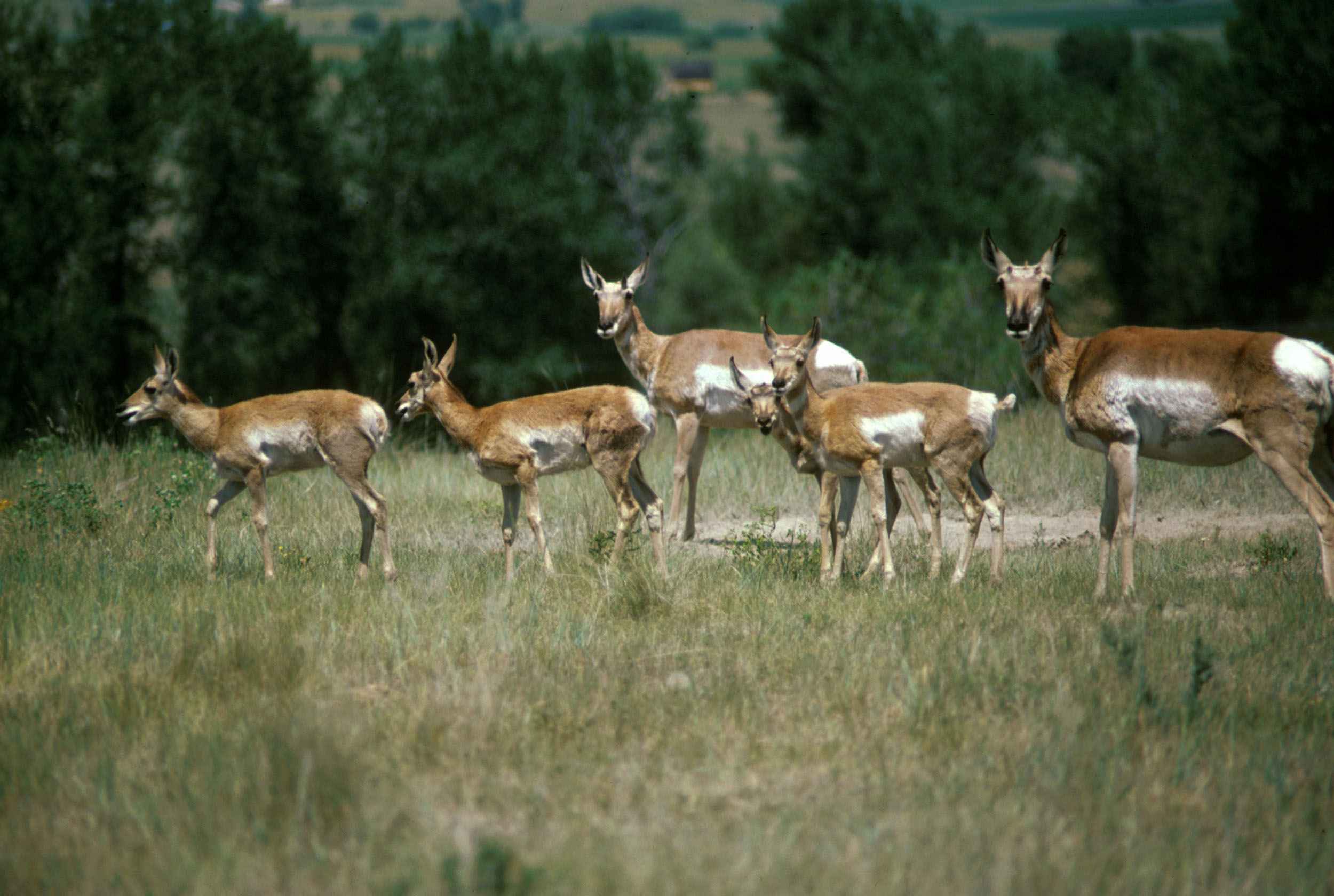
In so many ways, humans have altered or destroyed countless areas where animal species live or migrate. Migrations patters have been especially disrupted, as cities, towns, roads, highways and other kinds of human development have fractured migration corridors. Recently in Montana, volunteers played a big role in restoring a migration path for the antelope who roam big sky country. The volunteers have been stringing antelope-friendly fence, a project which has gone on for the past four years and included the modification of 18 miles of fence. These volunteer efforts may go a long way toward protecting the antelope and keeping the population in that area healthy and thriving.

The fence building and modification is a project of the National Parks Conservation Association.

Telling the Stories of Environmental Volunteers